The Story of the 3D Printer: From RepRap to Bambu Lab
By Admin, 17/09/2026 · 18 min read

3D printing history
The Story of the 3D Printer: From RepRap to Bambu Lab
Every printer in the workshop, from the Ender-3 V2 to the Bambu Lab H2D, descends from one open-source project started in a university in 2004. This is the story in order: the patents that held the technology back, RepRap, MakerBot, the Prusa i3, Creality's Ender-3, Prusa Research, and Bambu Lab.
The short version
The timeline at a glance
Before RepRap
Two patents, twenty years, 1983 to 2009
3D printing is older than most people think. In 1983 Chuck Hull cured a thin layer of liquid resin with ultraviolet light, then another on top of it, and made the first 3D-printed part. His company, 3D Systems, patented the method, stereolithography, in 1986. In 1989 Scott Crump filed a patent for a different idea: melt a plastic filament and lay it down in layers, like a very precise hot glue gun. He called it Fused Deposition Modelling, FDM, and founded Stratasys to sell it.
For twenty years those machines cost tens of thousands of dollars and lived in engineering firms and universities. The FDM patent was the main reason nobody could sell a cheap one. It expired in October 2009, and the dates that follow are not a coincidence.
RepRap
A printer that prints itself, 2004 to 2010
The University of Bath, Adrian Bowyer, and the decision to give everything away.
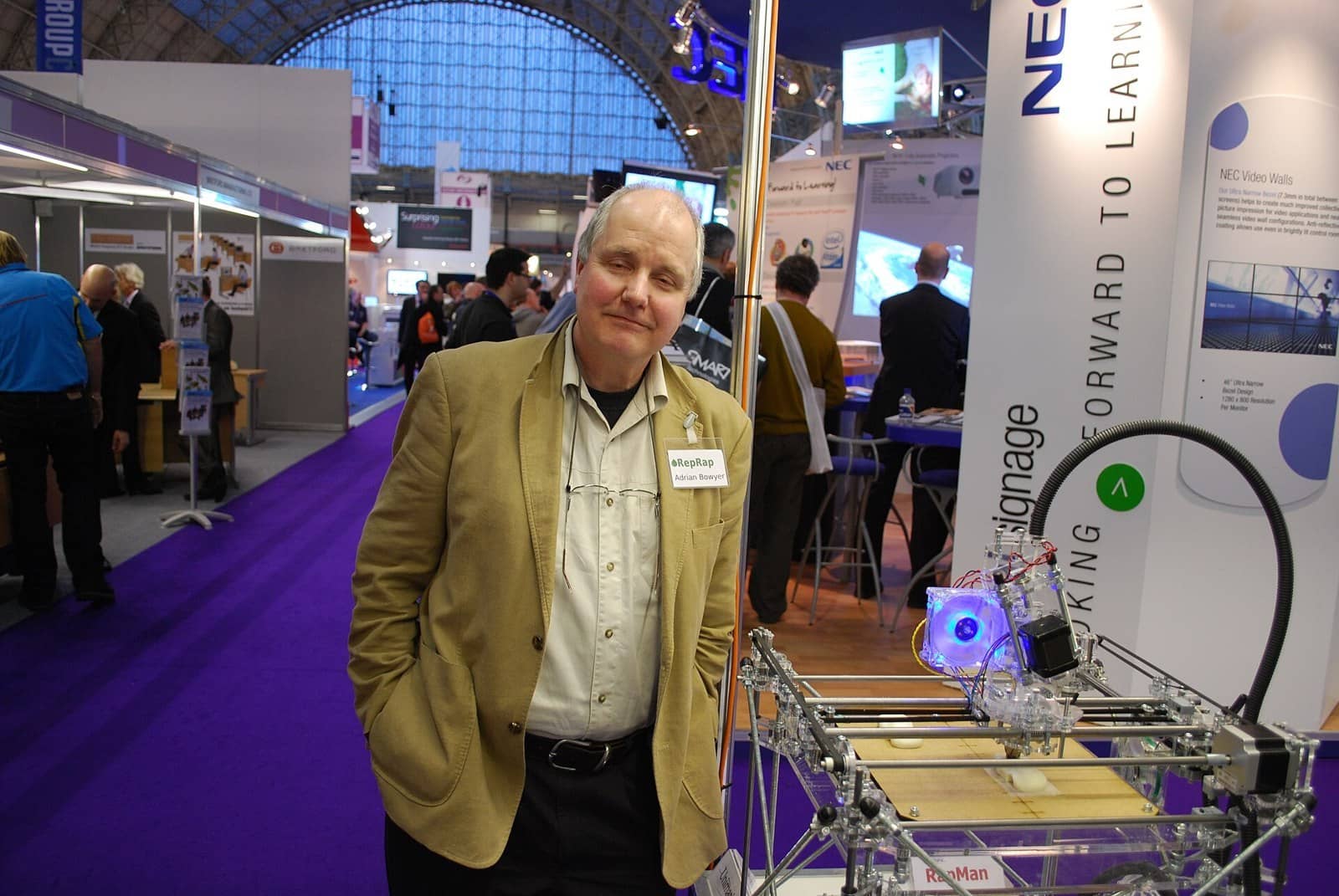
In February 2004 Adrian Bowyer, a lecturer in mechanical engineering at the University of Bath in England, published an idea he called RepRap, short for replicating rapid prototyper: a machine that could print most of its own parts, so that anyone who owned one could make another for a friend. The project was funded in 2005, and in September 2006 a prototype printed one of its own parts for the first time.
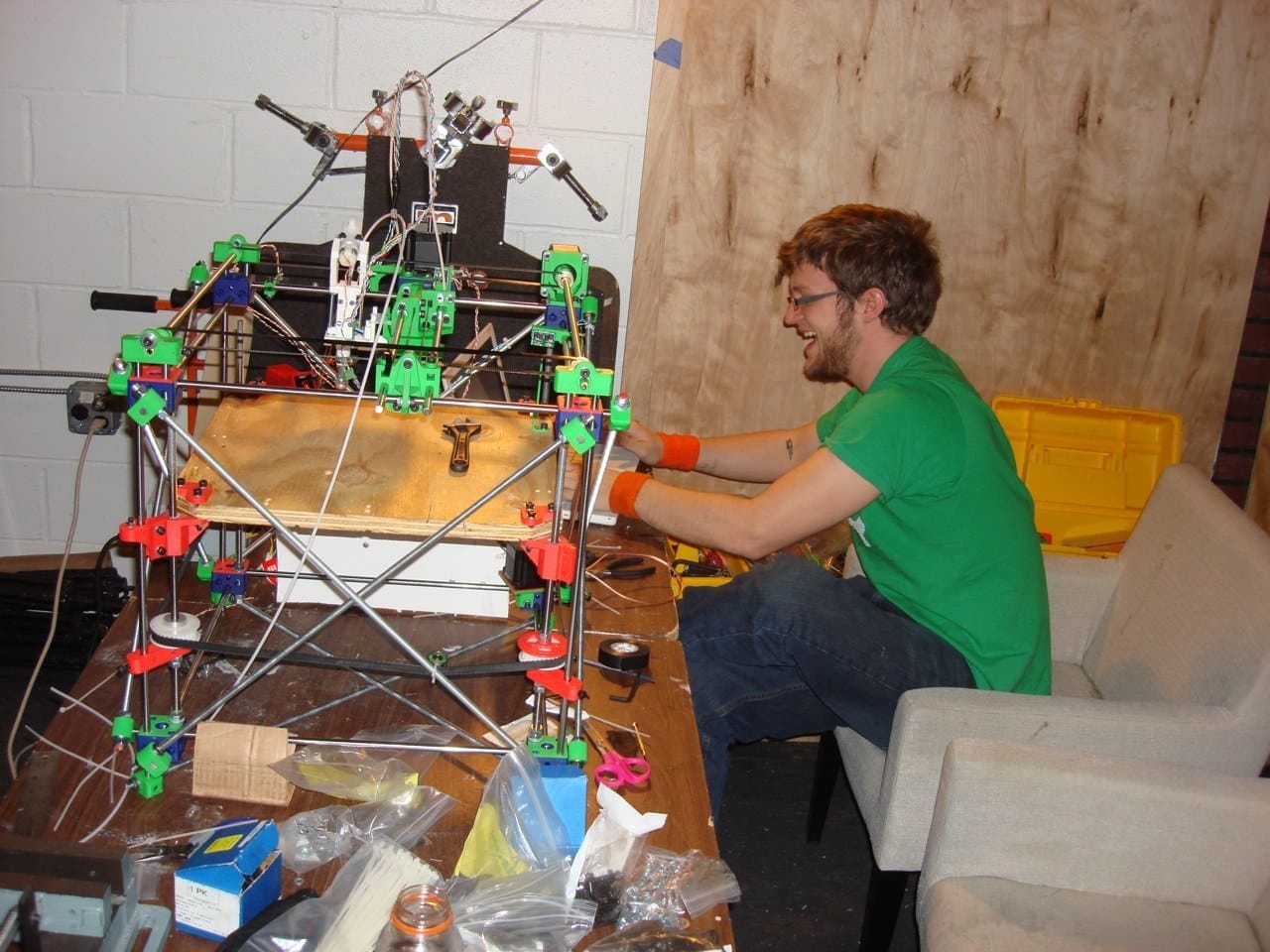
Darwin, the first full design, was finished in the spring of 2007. It was a cube of threaded steel rods held together by printed plastic corners, with a heated nozzle that pushed out molten plastic, moved by the same kind of stepper motors used in paper printers and scanners. On 29 May 2008, at Bath, Bowyer, Vik Olliver and Ed Sells assembled the first child machine from parts printed by its parent. That date is usually treated as the birthday of low-cost 3D printing.
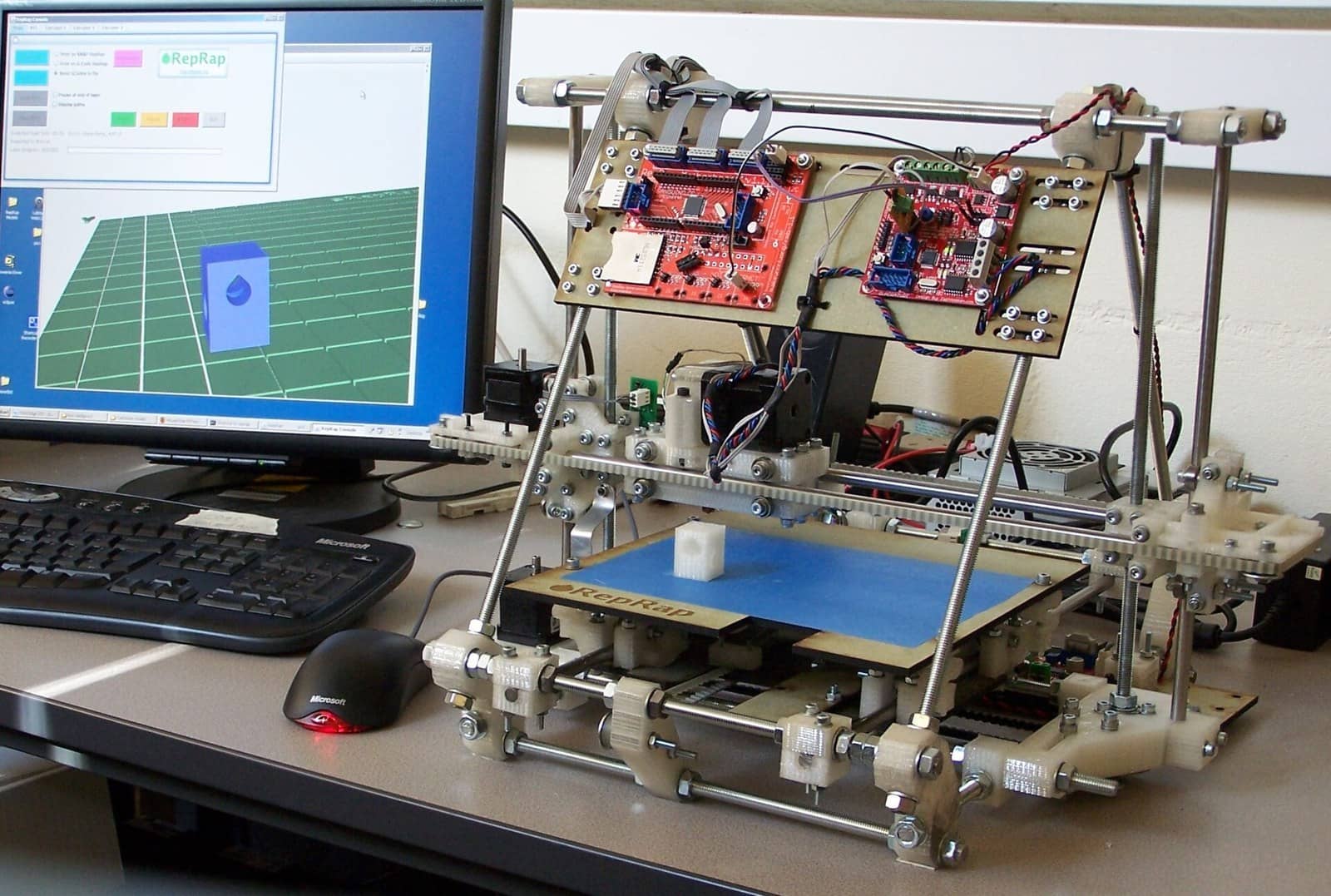
Mendel followed in October 2009, the same month the FDM patent expired: a triangular frame, roughly half the parts of Darwin, and a bigger build area. The smaller Huxley came in 2010. Every design, the electronics and the software were released under the GPL, a licence that lets anyone copy, change and sell them as long as they share their changes. That one decision is why the next fifteen years happened so fast.
Why it mattered
- Every desktop FDM printer since uses the RepRap layout: a frame, three axes driven by stepper motors, a heated nozzle and a filament extruder.
- The parts list was deliberately limited to hardware-shop items plus printed plastic, so one printer could build the next. That is also why the early machines look crude next to today's.
- The people who built RepRaps started the companies: MakerBot, Prusa Research, Ultimaker and the nozzle maker E3D all came out of the project.
MakerBot
The first printer you could buy in a box, 2009 to 2022
Brooklyn, a plywood kit, a television appearance, and the split that followed.
MakerBot Industries was founded in Brooklyn, New York, in January 2009 by Bre Pettis, Adam Mayer and Zach Smith, three members of the NYC Resistor hackerspace who had been building RepRap parts on its laser cutter. Adrian Bowyer was one of the first investors. Their first product, the Cupcake CNC, was a laser-cut plywood kit built around RepRap electronics; the first twenty shipped in April 2009 for US$750.
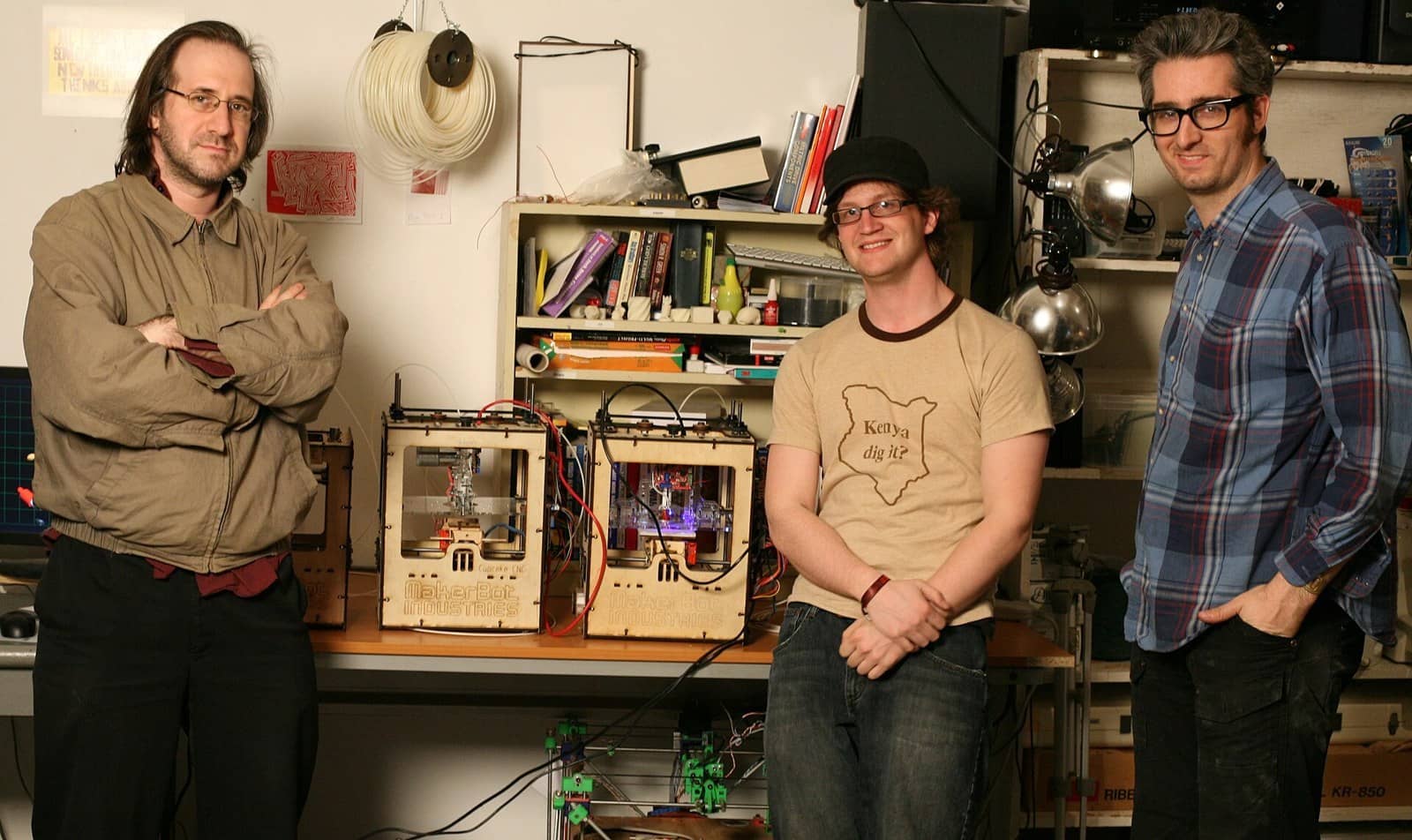
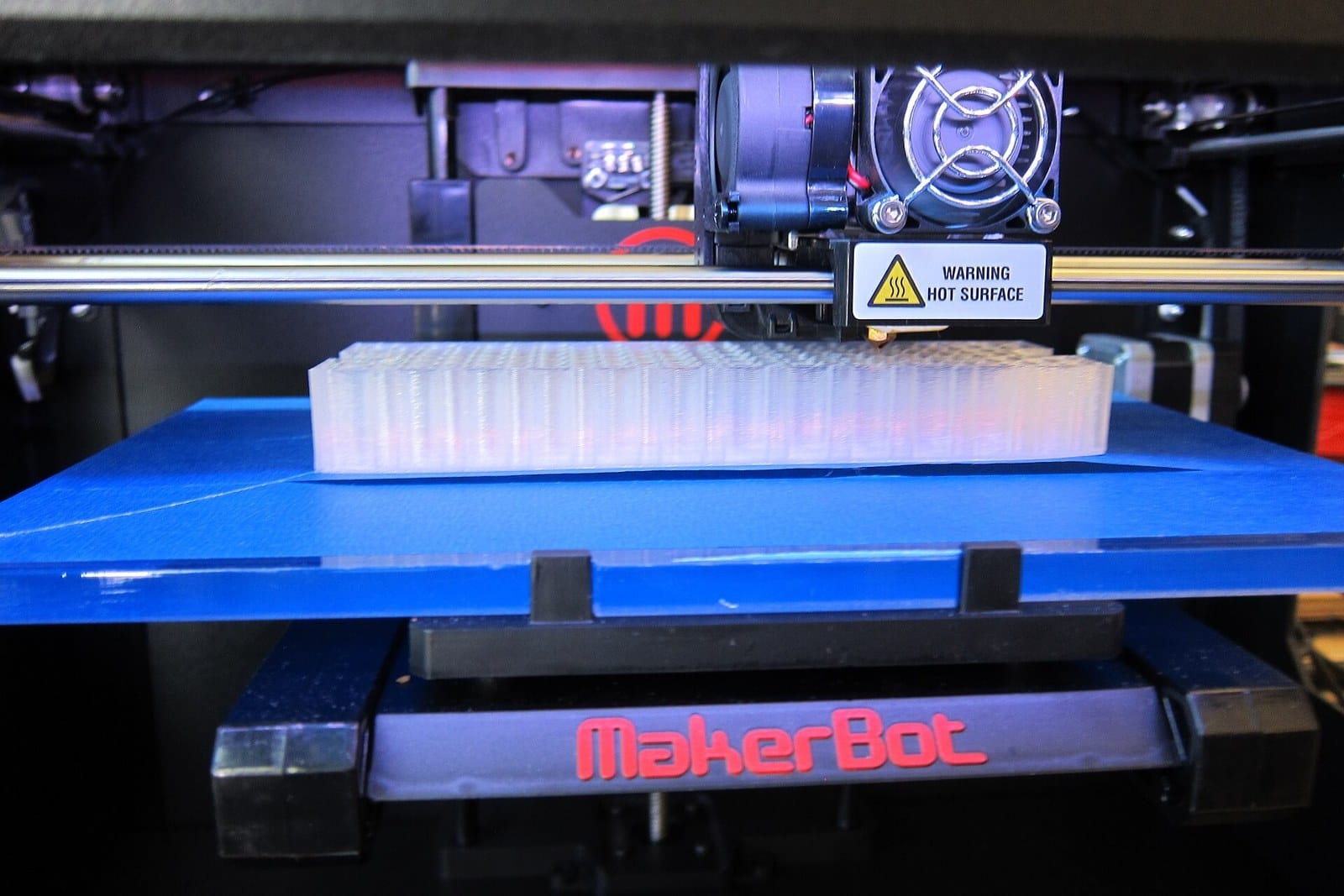
The Thing-O-Matic followed in September 2010. In June 2011 Pettis printed Stephen Colbert's head on American television, and a US$10 million investment that August paid for the Replicator, the first MakerBot sold fully assembled, launched at the CES show in January 2012 for US$1,749. Thingiverse, the model-sharing website Smith and Pettis had put online in 2008, became the place where beginners found their first file, and it still is.
In September 2012 the Replicator 2 arrived with a metal frame, a shop in Manhattan and, for the first time, design files the company kept to itself. The RepRap community that had built MakerBot took it badly; Josef Prusa organised a protest called Occupy Thingiverse. In 2013 Stratasys, the company that had held the original FDM patent, bought MakerBot for about US$403 million in shares. The 2014 printers shipped with a Smart Extruder that clogged, Pettis left that September, Stratasys wrote off more than it had paid, and staff were cut in 2015 and again in 2017. In 2022 what was left merged with Ultimaker to form UltiMaker, which still runs Thingiverse.
Why it mattered
- It turned RepRap into something a school or a hobbyist could order as a boxed kit with a support forum.
- It made a printer on your desk a mainstream idea: television, trade shows, and a shop on a New York street.
- The switch to closed designs pushed the open-hardware builders towards Prusa Research and, later, the Chinese manufacturers.
The Prusa i3
The layout everyone copied, 2010 to 2016
One flat frame, a bed that slides, and a licence that let the whole world build it.
In September 2010 Josef Prusa, a twenty-year-old student in Prague, simplified the RepRap Mendel: printed bushings instead of bearings, fewer parts, and a set of plastic parts that printed in ten hours instead of twenty. In May 2012 he published the Prusa i3, iteration three. The i3 replaced the rod frame with a single flat plate of aluminium or wood. The bed slides forward and back (the Y axis), the nozzle slides left and right (X) on a gantry that climbs two vertical screws (Z).
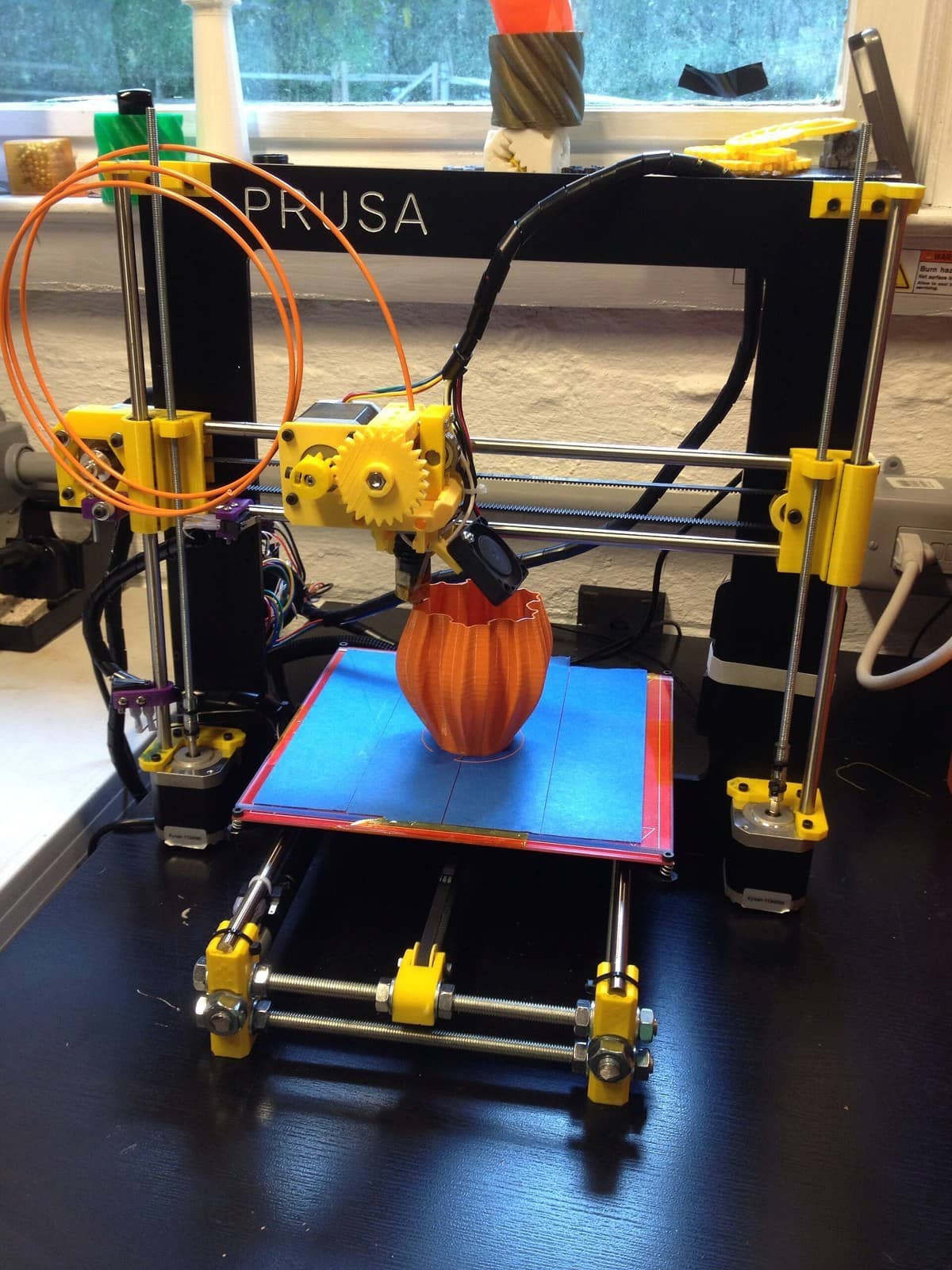
It was cheap, easy to build and GPL-licensed, so it became the most copied printer design in the world. By 2015 thousands of i3 variants were on sale from dozens of companies, and in 2016 it was the most used printer on the 3D Hubs printing network, which Guinness World Records listed as the most popular 3D printer. If a printer looks like an open frame with a bed that moves towards you, it is an i3 descendant.
Why it mattered
- The i3 layout is what the Creality Ender-3 and hundreds of other printers still use.
- A flat frame meant a printer could be cut on a laser or a water jet in any workshop, not only printed part by part.
- Josef Prusa's company, Prusa Research, started in Prague in 2012 as a one-person business with no investors, and by its own account now ships more than 10,000 printers a month.
Creality and the Ender-3
The US$200 printer, 2014 to 2024
Shenzhen, an i3 descendant, and three million machines.
Shenzhen Creality 3D Technology was founded in 2014 by four graduates working in a 20 square metre workshop. Its first hit, the CR-10 of 2016, was a large i3-style printer that spread through YouTube reviews. In March 2018 it released the Ender-3: a 220 by 220 by 250 mm kit, an i3 descendant with aluminium extrusions for the frame, an 8-bit control board, a Bowden extruder that pushes filament down a tube, and four knobs for levelling the bed by hand, for about US$200.
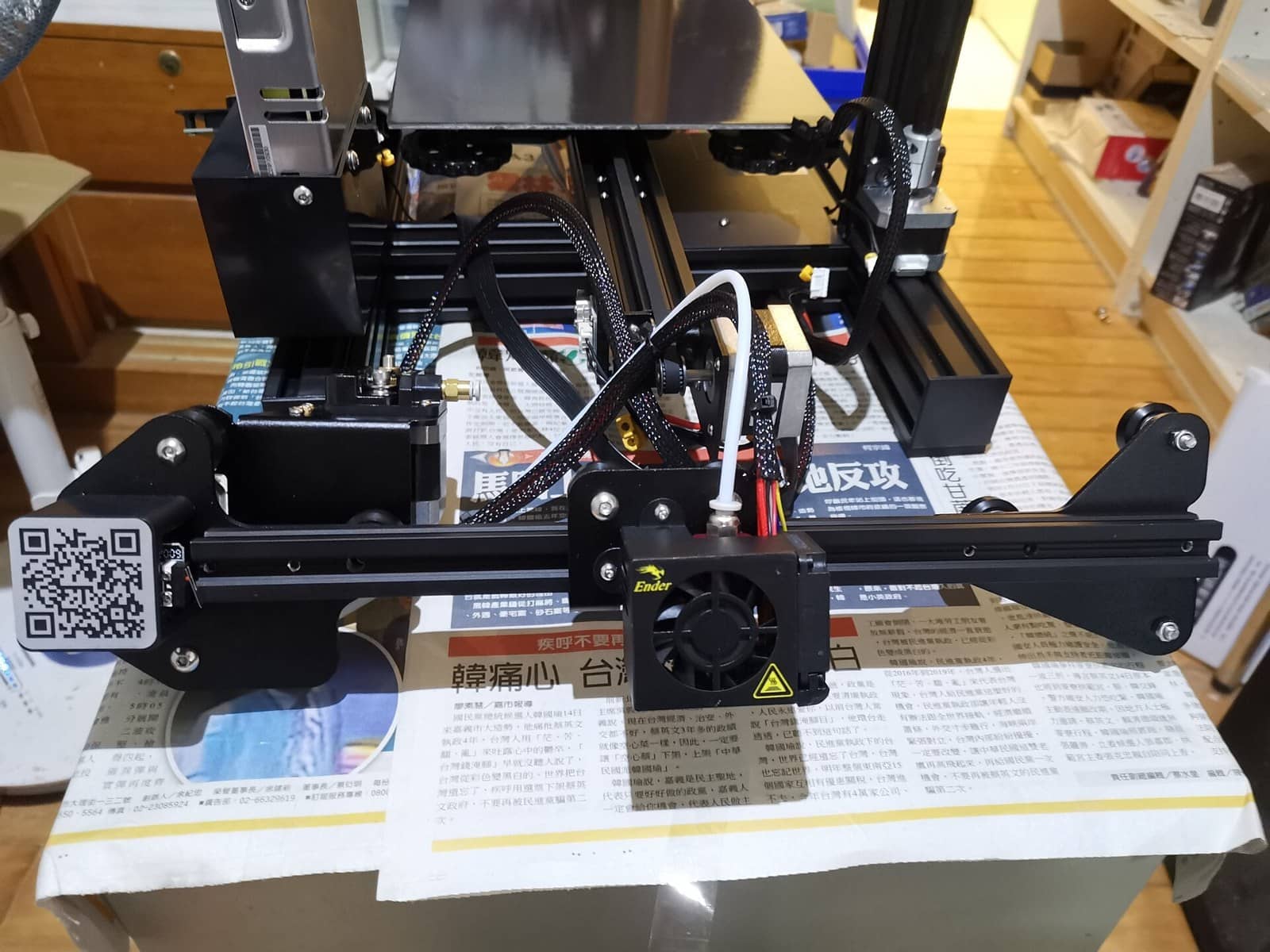
The firmware was Marlin, which is GPL, and Creality was slow to publish its changes. After pressure from the community, and a US distributor dropping the brand over it, the Ender-3 was certified by the Open Source Hardware Association on 30 June 2018 and the files went on GitHub. Cheap, open and made of standard parts, it became the default first printer for about five years; Creality says more than three million Ender-series machines had shipped by 2023. The Ender-3 V2 of April 2020 added a silent 32-bit board, a glass bed and a colour screen but kept the manual levelling and the Bowden extruder. It is the printer used in this site's Bambu Studio settings comparison.
The trade-off was time and patience. Every Ender-3 up to the V2 had to be levelled by hand, ran at 50 to 60 mm/s in practice, and a bad first layer was the commonest reason a beginner gave up. Later versions answered that: the S1 of December 2021 with a direct-drive extruder and a levelling probe, the V3 SE and KE of 2023 with automatic levelling, and the V3 of February 2024, a CoreXZ machine rated at 600 mm/s.
Why it mattered
- At about US$200 it put a working printer within reach of students, schools and hobbyists, which is why so many people's first printer was an Ender.
- Open files and standard parts meant a broken part could be replaced or printed, not thrown away with the machine, and a huge community of upgrades grew around it.
- Its weaknesses, manual levelling, slow speed and first-layer failures, are exactly the problems the next generation of printers was built to remove.
Prusa Research
The printer that levels itself, 2016 to 2025
Prague, a farm of printers making printers, and the end of the bed-slinger.
Prusa Research began selling its own printer, the Original Prusa i3, in 2015. The MK2 of May 2016 made automatic bed levelling standard on a mass-market printer: a probe measures nine points and the firmware tilts every layer to match, so the user stops turning knobs. The MK3 of September 2017 added a filament sensor, recovery from a power cut and removable spring-steel sheets, and the MK3S and MK3S+ refined it. In February 2018 the Prague factory ran 300 of its own printers making the plastic parts for new ones; today it runs more than 700. In the spring of 2020, MK3S owners around the world printed face shields for hospitals.
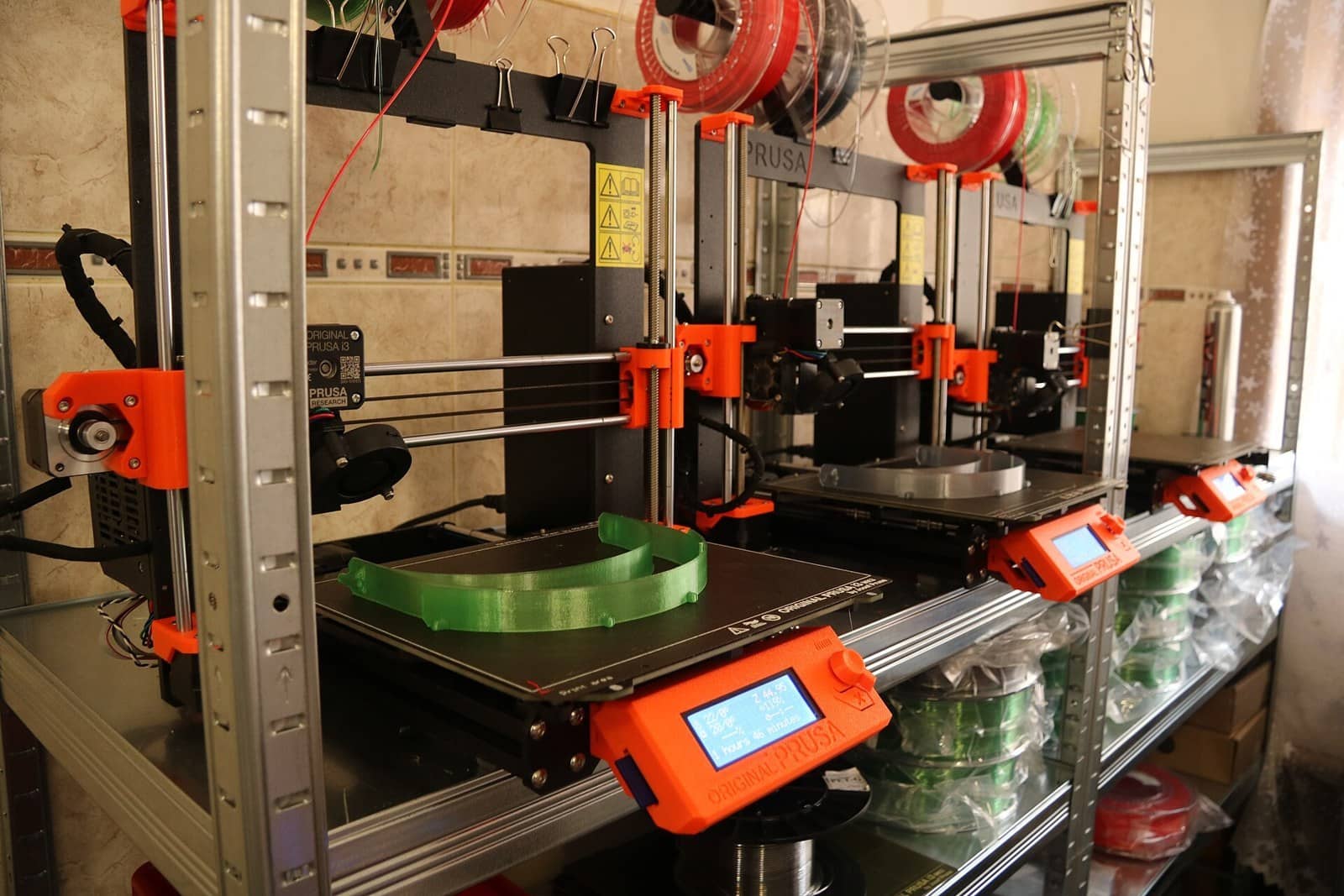
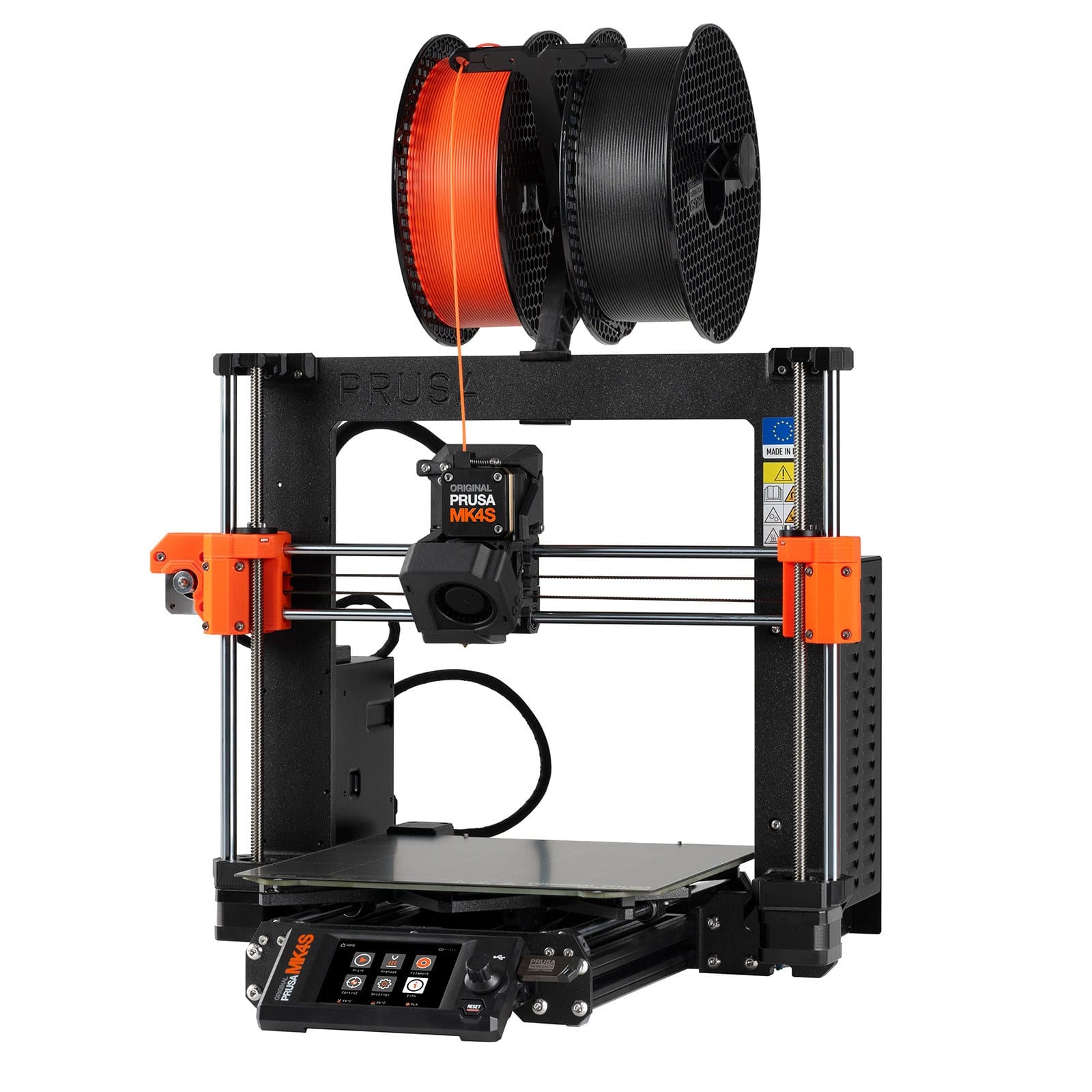
The MK4 of March 2023 replaced the probe with a load cell in the nozzle, so the first layer sets itself, and added input shaping so it could print faster without wobbling. The MK4S came in August 2024. In November 2024 Prusa announced the CORE One, an enclosed CoreXY printer, its first that is not an i3, shipping from January 2025.
Why it mattered
- Automatic bed levelling started here, on the MK2, and every printer that followed had to match it.
- The Prusa factory is the RepRap idea at industrial scale: printers making the parts for more printers, about six tonnes of filament a month.
- By 2024 even Prusa had moved to an enclosed CoreXY design, which tells you where the industry went next.
Bambu Lab
The printer as an appliance, 2020 to today
Shenzhen, a Kickstarter, and the machines in this workshop.
Bambu Lab was founded in Shenzhen in 2020 by Tao Ye, who had run DJI's consumer drone department, and a small group of former DJI colleagues. They spent two years building one printer in private. The X1 series was announced on 23 May 2022 and put on Kickstarter on 31 May; a month later it had raised about US$7 million from 5,575 backers, and every backer's unit had shipped by August.
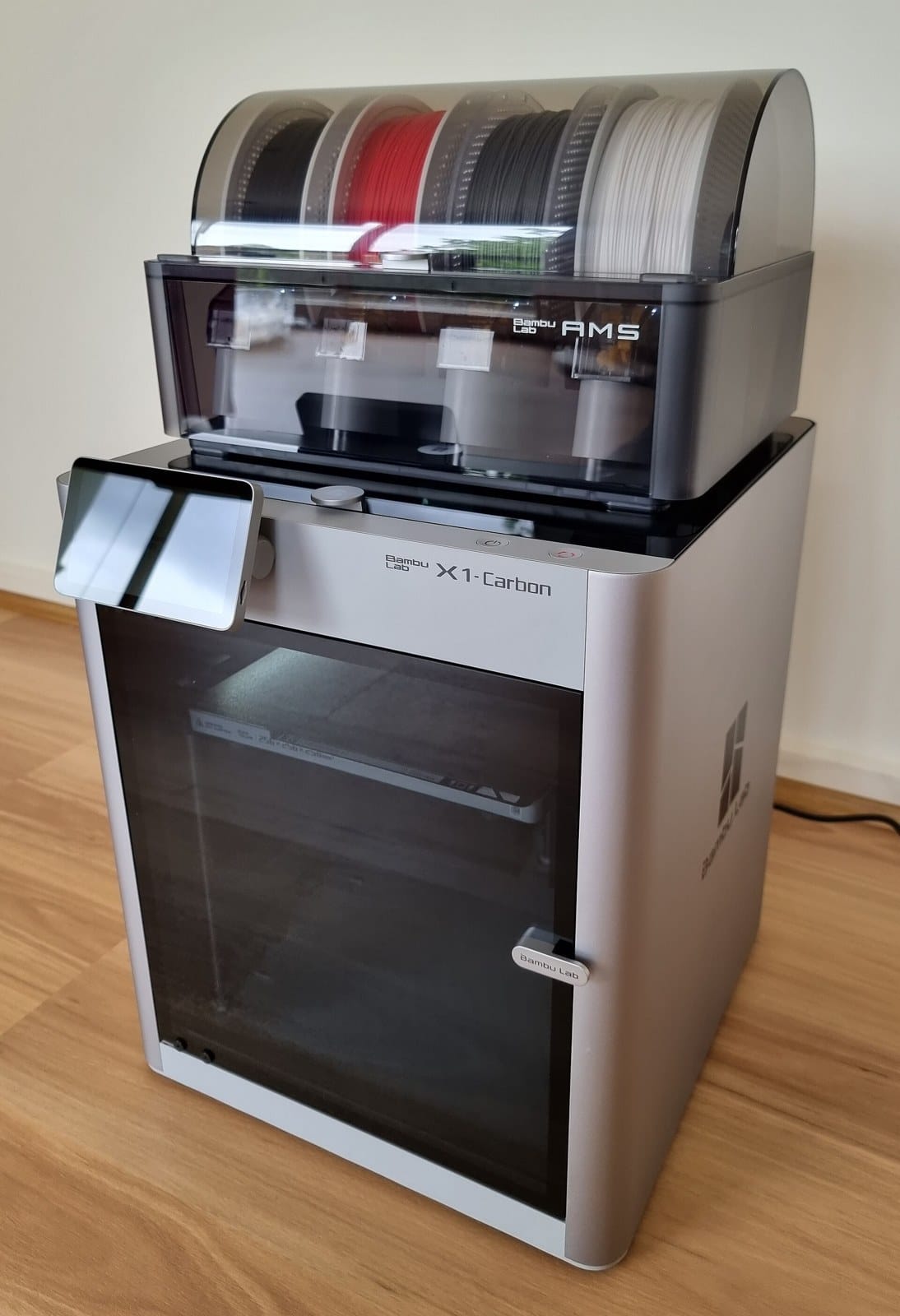
The X1 Carbon was an enclosed CoreXY printer: the bed only moves up and down, and two motors share the X and Y motion through one belt system, which is faster and stiffer than throwing a bed back and forth. A lidar checked the first layer, the printer calibrated its own bed, flow and vibration, it ran at up to 500 mm/s, and the AMS on top fed four spools, sixteen with four units, so multi-colour printing became a tick-box on the order form instead of a modification. TIME magazine listed it among the best inventions of 2022.
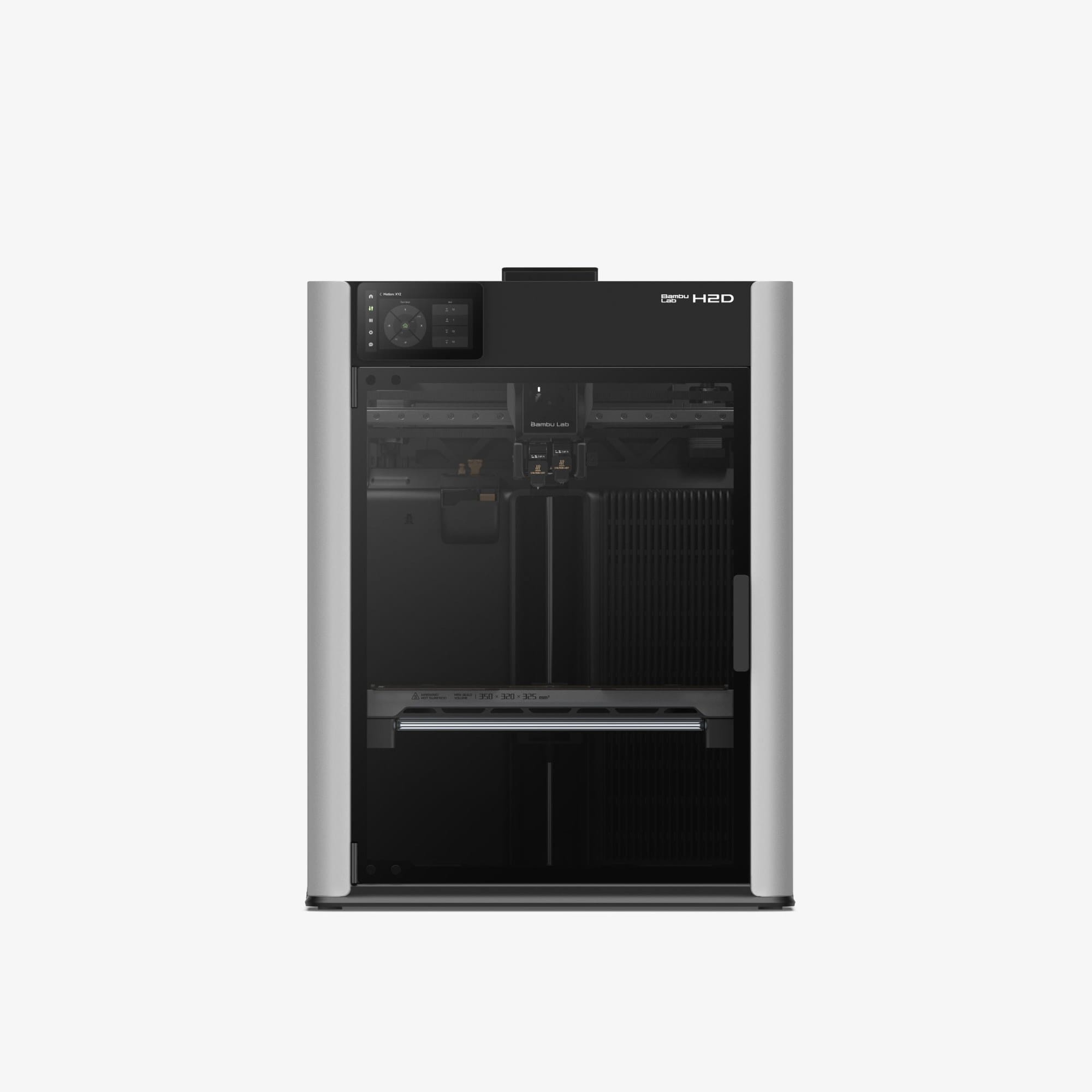
The range followed quickly: the open-frame P1P in November 2022 at US$699, the enclosed P1S in July 2023 at the same price, the A1 mini in September 2023 at US$299, the A1 in December 2023 (recalled and replaced in early 2024 over a heat-bed cable), the dual-nozzle H2D in March 2025 with an optional laser, and the P2S in October 2025. Creality answered with the CoreXY K1 within a year, Prusa with the CORE One, and in 2025 Bambu Lab overtook Creality as the biggest seller of desktop printers under US$2,500, according to the market analyst CONTEXT. Fix It Today's own printers are Bambu Lab machines: the X1 Carbon, the P1S and the H2D.
The appliance model brought new dependencies. A cloud outage in August 2023 restarted finished jobs on some printers, and a January 2025 firmware change that put printer control behind Bambu's own app drew heavy criticism until a local-network developer mode was added days later. Schools and makerspaces learnt to run their printers on the local network, and to look for a five-year parts promise, which Bambu now publishes for each retired model.
Why it mattered
- Calibration stopped being the user's job. The first layer, the reason most beginners gave up on an Ender, is now set by the machine.
- Speed expectations reset: 500 mm/s became the baseline at hobby prices, and Creality and Prusa redesigned their ranges around enclosed CoreXY machines to match.
- Reliability made small fleets practical. One teacher can run four P1S printers for a class, which is what makes a school workshop workable.
Side by side
Three printers, fourteen years apart
The same idea, a frame with a hot nozzle and stepper motors, at three points in time.
2008
RepRap Darwin
Year and price
2008, built from parts for a few hundred pounds
Frame
Threaded steel rods and printed plastic corners
How the nozzle moves
Three axes on rods, moving bed
Bed levelling
By hand, with a feeler gauge
Typical speed
Around 15 mm/s
Colours
One
Who built it
You, over a weekend or three
2018
Creality Ender-3
Year and price
2018, about US$200
Frame
Aluminium extrusions, i3 layout
How the nozzle moves
Bed slides on Y, nozzle on X, gantry climbs Z
Bed levelling
By hand, four knobs, every few prints
Typical speed
50 to 60 mm/s in practice
Colours
One
Who built it
You, in an evening, from a kit
2022
Bambu Lab X1 Carbon
Year and price
2022, US$1,199
Frame
Enclosed steel and aluminium box, CoreXY
How the nozzle moves
Bed moves only on Z; two motors share X and Y through belts
Bed levelling
Automatic, checked by lidar before every print
Typical speed
Up to 500 mm/s
Colours
Four per AMS unit, up to sixteen
Who built it
The factory; it calibrates itself on first start
Photo credits
The RepRap, MakerBot, Prusa i3, Ender-3 and X1 Carbon photographs are Creative Commons images from Wikimedia Commons, reused under their own licences and credited below. The Prusa MK4S and Bambu Lab H2D pictures are the manufacturers' product photos. The picture at the top of the page is a collage of four of the photographs listed here.
Where to go next
From the history to your first print
Related articles

Building More With Tinkercad: A Storage Box With a Lid
A more advanced Tinkercad project than a keychain: a hollow storage box and a separate lid, built with a Hole shape, Align on all three axes, a Union group and a raised label. Part 4 of the series.

The Tinkercad Toolbox: Every Tool, What It Does
Every Tinkercad tool explained: the full shape library, Align, Mirror, Group and Ungroup, the Workplane tool, Colour, Snap Grid, and Import and Export. Part 3 of the series.

Your First Model: A Keychain in Tinkercad
Build a name keychain in Tinkercad from a blank workplane: the plate, a ring hole, your name, and grouping it into one printable shape. Part 2 of the series.