Group 4: compare your two ideas
Choose one difficulty to help with. Compare both ideas, make one useful change and explain a fair test. The model examples show design proposals, not equipment proven to work.
Idea 1: Rainwater plant pot
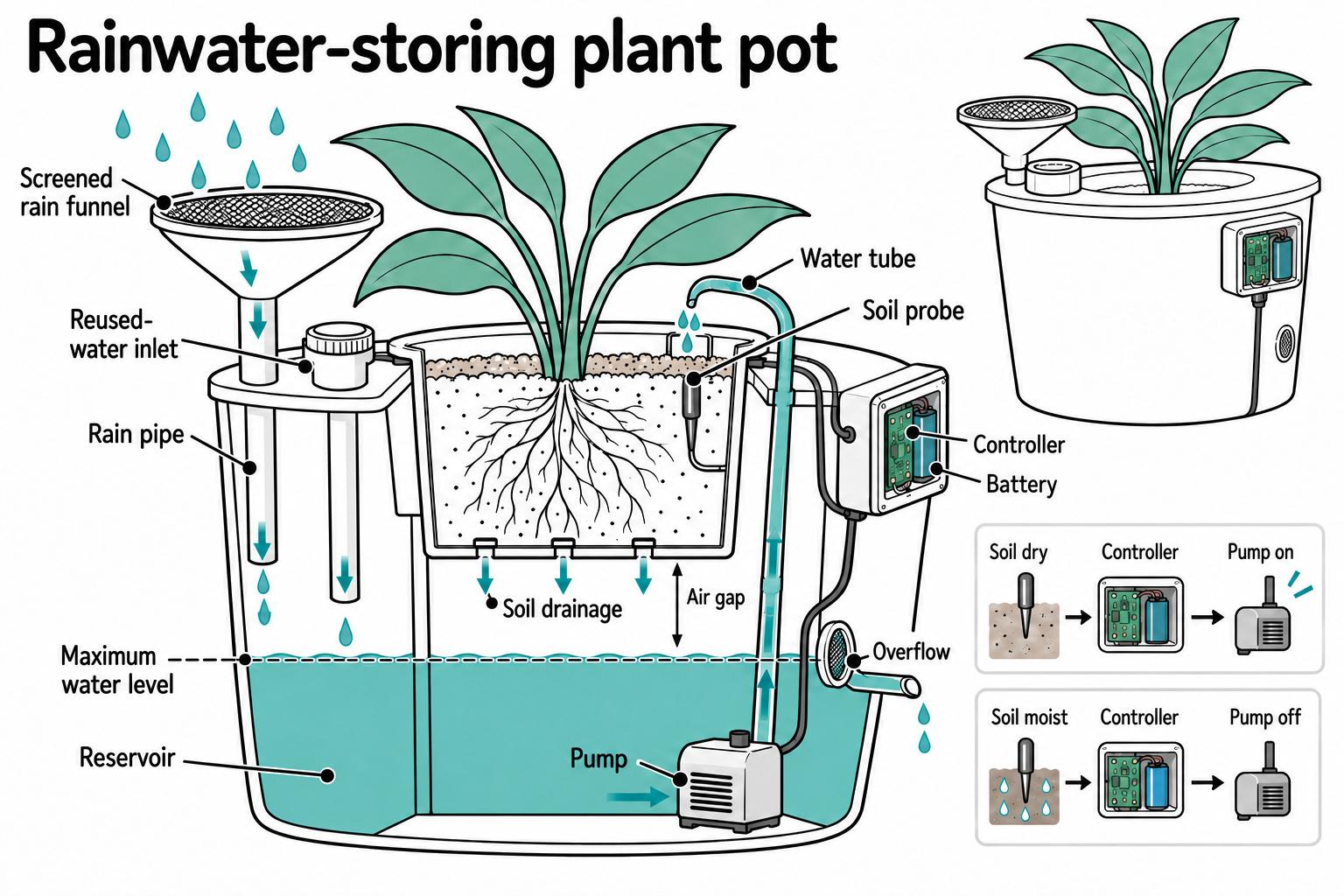
Who it could help: A busy person caring for plants
The problem
Plants need water when their soil becomes dry.
Why it matters
Stored rainwater and suitable reused water could reduce waste.
The idea
A pot that collects water and uses a soil probe and pump to water the plant when needed.
How it works
- Collect rain and suitable reused water.
- The probe checks the soil.
- Dry soil switches the pump on.
- Moist soil switches it off.
What to find out
Is the water suitable, and is the soil setting right?
Check water flow, drainage, overflow and an empty tank.
Earlier drawing is preserved
Compare the revision with the original before building.
Open the earlier illustration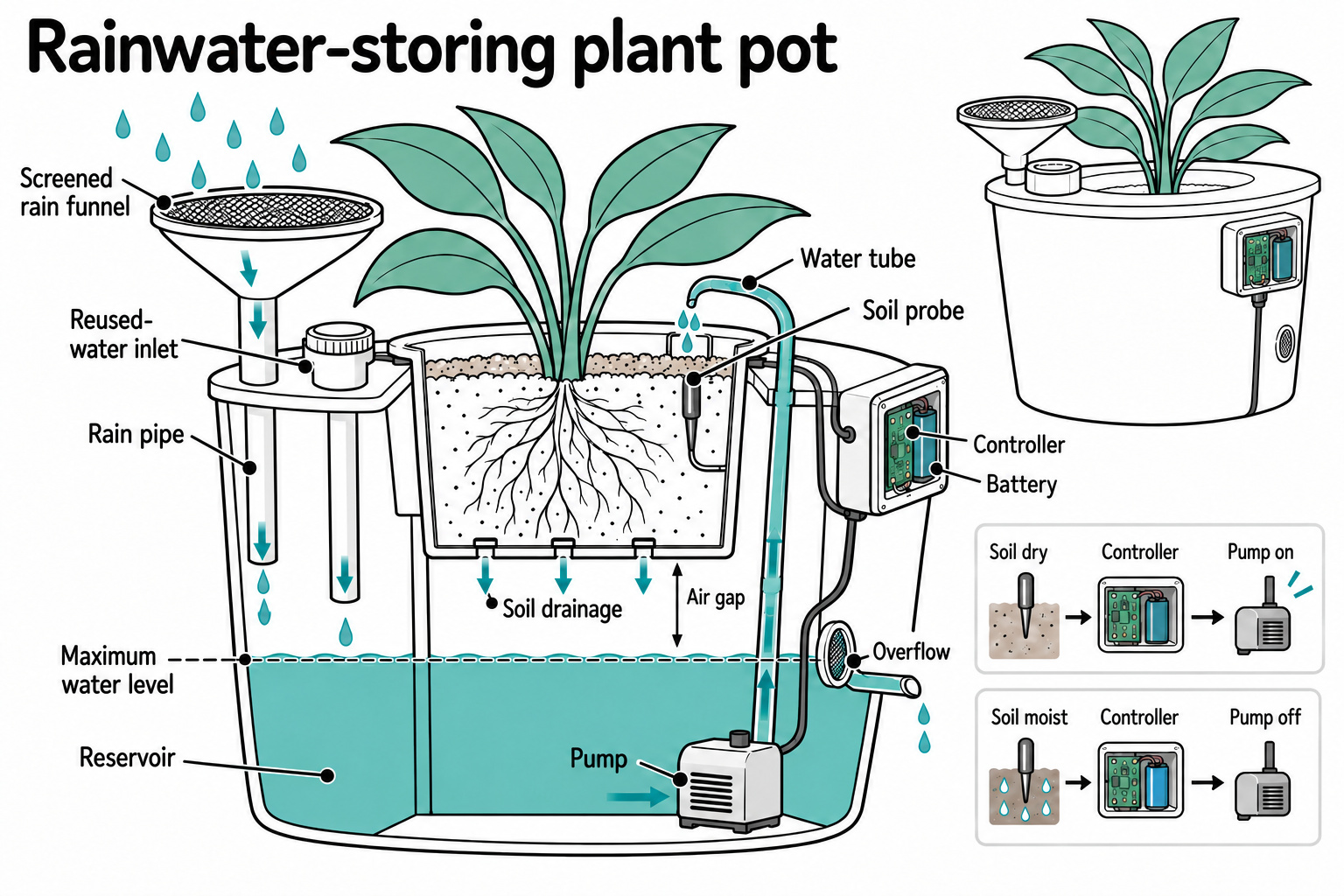
2D drawing and Tinkercad instructions
Read the current drawing, label one change, and keep the original. In your drawing workspace, use the illustration as a fixed reference and add editable marks over it. Save the draft, then submit the drawing separately from your written answers.
Build a 3D concept with your teacher
- Use boxes and cylinders to match the existing illustration.
- Separate moving parts from fixed supports and label them.
- Measure fit and explain the original mechanism before changing geometry.
Use your assigned Tinkercad workspace. Verify the group, idea and units before opening an existing project. Duplicate it before changing it. Measure supplied parts and ask your teacher to check fit before printing. These instructions do not edit or connect to Tinkercad.
The prompts below contain the public design description only. They are not sent anywhere by FIT. A teacher or adult conducts the ChatGPT conversation and reviews any generated drawing or instructions. Keep pupil details and private submissions out of the prompt.
2D drawing prompt
Tinkercad instructions prompt
Idea 2: Doorbell wristband
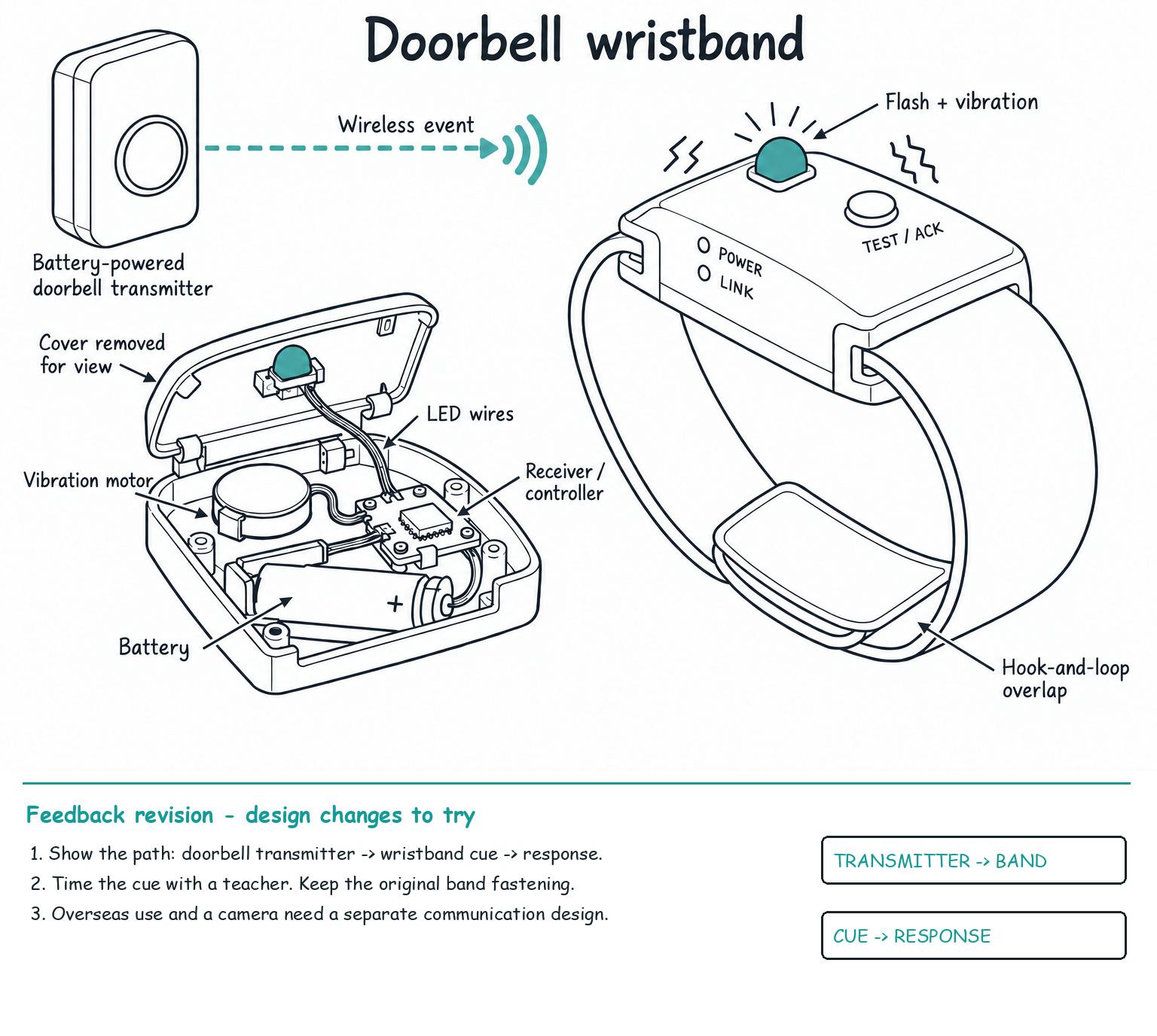
Who it could help: Someone who may not hear the doorbell
The problem
A person with hearing difficulties may miss someone ringing the doorbell.
Why it matters
Flashing lights and vibration could help the wearer notice a visitor.
The idea
A wristband that flashes and vibrates when someone rings the doorbell.
How it works
- Someone presses the doorbell.
- The band receives the signal.
- The band flashes and vibrates.
What to find out
Can the wearer feel the vibration and see the light?
Test comfort, range, missed alerts and battery life.
Feedback revision: changes to try
- Show the path: doorbell transmitter -> wristband cue -> response.
- Time the cue with a teacher. Keep the original band fastening.
- Overseas use and a camera need a separate communication design.
Earlier drawing is preserved
Compare the revision with the original before building.
Open the earlier illustration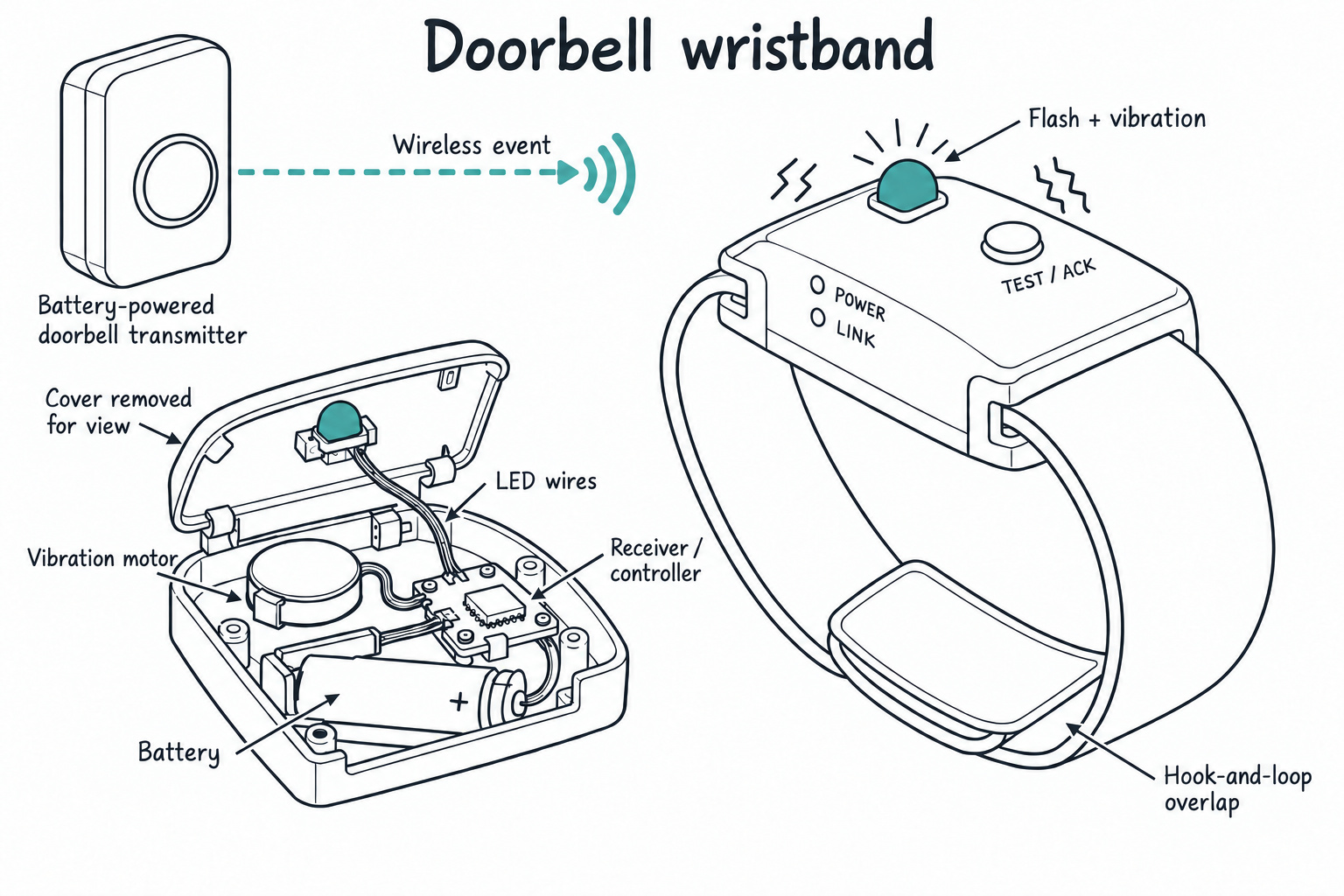
2D drawing and Tinkercad instructions
Read the current drawing, label one change, and keep the original. In your drawing workspace, use the illustration as a fixed reference and add editable marks over it. Save the draft, then submit the drawing separately from your written answers.
Build a 3D concept with your teacher
- Use a rounded box for the receiver and a thin strap placeholder.
- Label transmitter, receiver and cue; do not model a new magnet fastening.
- Measure the supplied equipment and band fit before adding holes.
Use your assigned Tinkercad workspace. Verify the group, idea and units before opening an existing project. Duplicate it before changing it. Measure supplied parts and ask your teacher to check fit before printing. These instructions do not edit or connect to Tinkercad.
The prompts below contain the public design description only. They are not sent anywhere by FIT. A teacher or adult conducts the ChatGPT conversation and reviews any generated drawing or instructions. Keep pupil details and private submissions out of the prompt.
2D drawing prompt
Tinkercad instructions prompt
Your three activities
Activity 1
Improve the problem
Name a person, one difficult step and the evidence we need.
- Read the problem statement and the suggested wording.
- Ask what actually goes wrong when watering is missed, and whether checking or refilling an existing reservoir is difficult.
- Choose one difficult step. Complete your own improved statement.
Check: Name who needs help, what is difficult and what you still need to test.
Activity 2
Make the idea work
Show a useful change and explain how the parts connect.
- Trace one unbroken wick from below the water surface into the soil.
- Show a gap between stored water and the pot floor.
- Show the guide moving sideways without pulling out the buried wick.
Check: The drawing shows an input, movement or action, and a result. It distinguishes the printed structure from supplied equipment.
Activity 3
Test and explain
Compare fairly and explain what the result means.
- Use this comparison: A plain wick reservoir with the same container, wick and planting medium.
- For class, demonstrate the path and compare access to the wick. Plan a longer water-delivery comparison with equal starting water and conditions.
- Record what happened, or write the test plan if the equipment is not available. Explain one next change.
Check: Keep the guide only if inspection is easier and the wick remains connected. The longer trial must show suitable delivery for the chosen pot without overflow.
Start your shape model
- Choose one reviewed idea and sketch its main parts.
- In Tinkercad, use boxes or cylinders for the structure. Set the sizes from measurements and label supplied equipment separately.
- Show one useful change, check how parts would connect and save a screenshot of your model for your teacher.
Use your teacher’s assigned workspace. Do not enter class joining details or account information in your answers. Ask your teacher before printing, powering or physically testing equipment.
Optional presentation preparation (saved only on this browser)
Your group’s answers
Use group numbers only. Do not enter names, emails, logins or private class links. Answers stay in this browser, on this device. They are not sent to FIT or a teacher. Download or print a copy to share with your teacher. On a shared device, clear this group after keeping your copy.
Group 4 answers
Chosen idea: Not chosen
- The person and place
- Not answered
- The difficult step
- Not answered
- What we know or need to find out
- Not answered
- Our improved problem statement
- Not answered
- One change we choose and why
- Not answered
- Printed parts and parts we need to supply
- Not answered
- What we compare and keep the same
- Not answered
- Our result or planned measurement
- Not answered
- Our next change and reason
- Not answered
- Our main message for the presentation
- Not answered
Loading your saved answers.